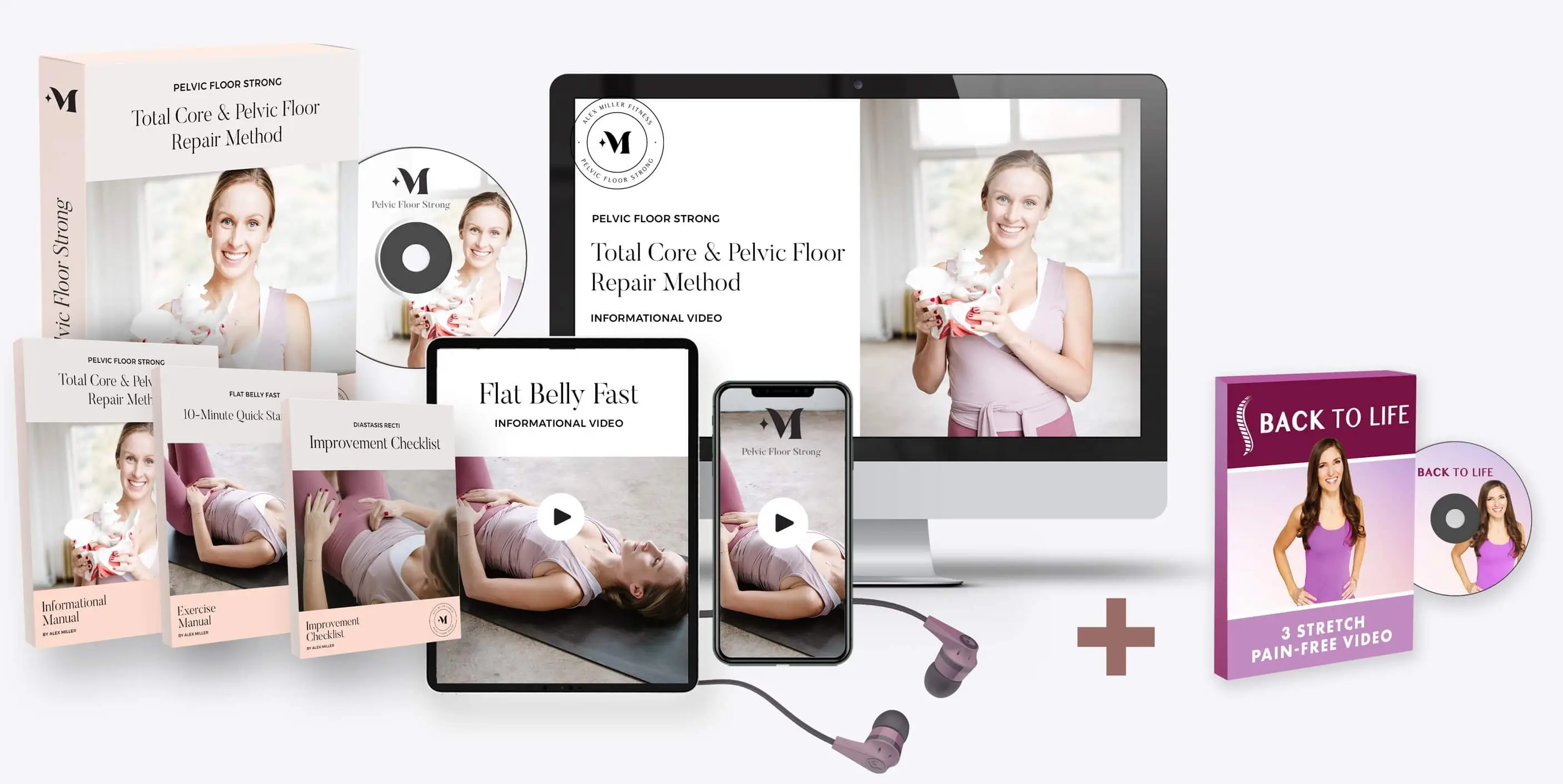
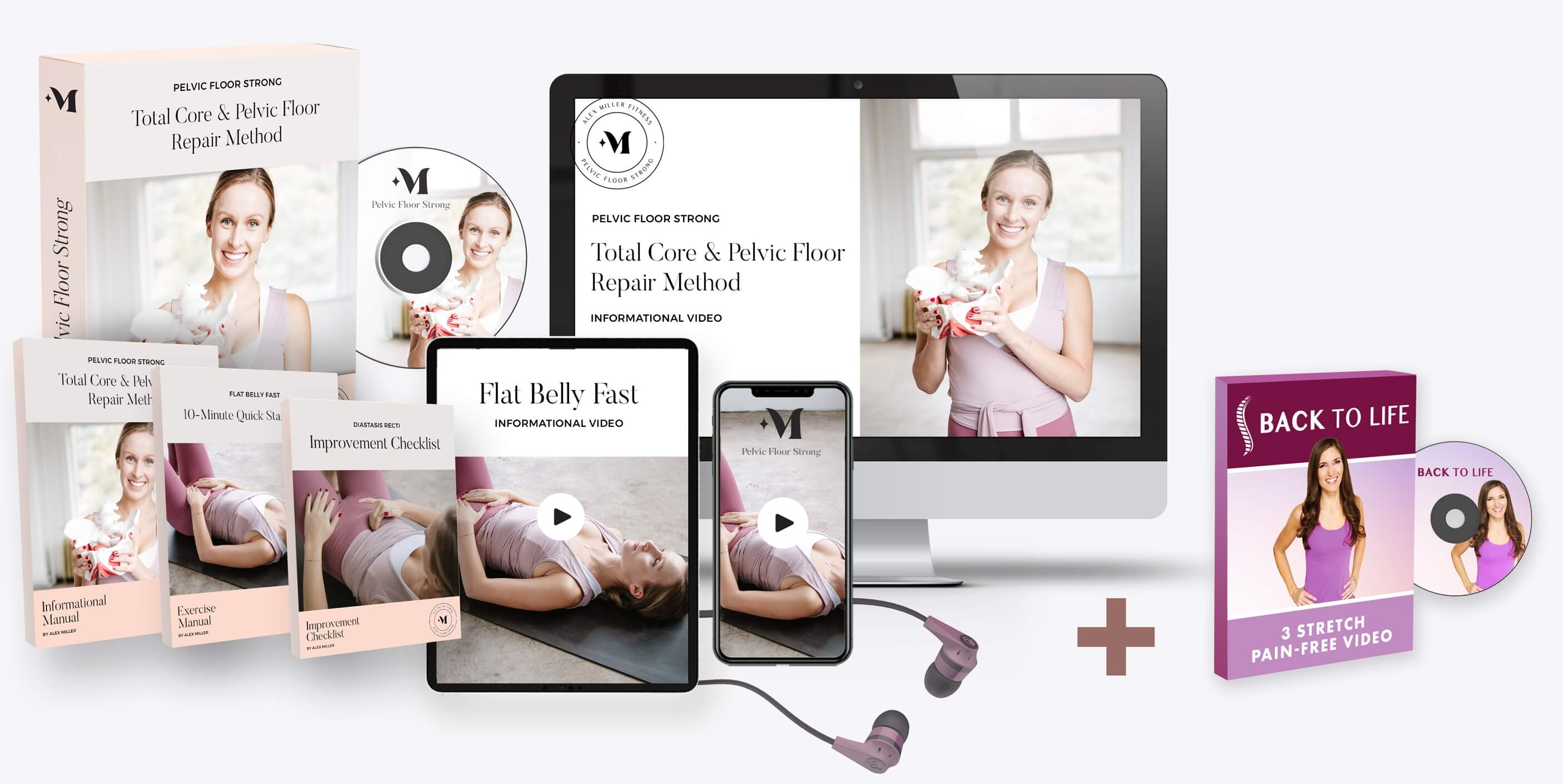
Pelvic Floor Strong is a comprehensive pelvic floor training program developed by fitness expert Alex Miller. You can use it at home to rebuild pelvic floor strength, reduce bladder leakage (for example, leaks when sneezing or exercising), and address other common pelvic health concerns naturally.
Pelvic Floor Strong is a structured program of simple, daily floor exercises designed to strengthen the pelvic floor and surrounding muscles. Whether your goals are better bladder control, improved pelvic health after childbirth, or reduced pelvic dysfunction, the plan focuses on practical routines you can fit into everyday life to build pelvic floor strength and core stability.
The program uses a simple, progressive 3-step movement system that trains the pelvic floor and surrounding core muscles to work more effectively in daily life. By following these guided exercises, women may notice improved bladder control, greater core stability, and smoother recovery after pregnancy — including practical support for people managing diastasis recti. Read on for what the program includes, who it helps most, and quick safety tips before you start.
Pelvic Floor Strong is a guided exercise program created by Alex Miller, a women’s health specialist and fitness instructor. The program is commonly marketed toward women over 40 who want to reduce urinary issues—like leakage or frequent urination—by improving pelvic floor strength and overall core support.
The program centers on progressive routines that target the pelvic floor muscles and surrounding core. Strengthening the pelvic floor can also support better posture and a firmer midsection over time. Some clinicians, such as Heather Jeffcoat, DPT (founder of Femina Physical Therapy), note that improved pelvic support may contribute to overall core function and posture; however, claims about weight loss or dramatic belly flattening should be regarded as possible secondary benefits rather than guaranteed outcomes.
Pelvic Floor Strong is available in digital and physical formats and delivers short daily sessions to fit into busy schedules. Typical sessions are brief and designed to combine Kegels, core integration work, and mobility drills so users can progressively build pelvic floor strength and track small improvements over weeks.
Pelvic Floor Strong was created by Alex Miller, a women’s health specialist and fitness instructor based in Vancouver, Canada.
She developed the program after years teaching Pilates, functional movement, pre‑ and postnatal exercise, meditation, and strength training, combining movement education with pelvic floor–focused protocols to help women rebuild core and pelvic support.
Pelvic Floor Strong uses short, progressive sessions plus guided video instruction and educational materials so you can rebuild pelvic floor strength and improve overall core stability from home.
The program combines focused movement categories — Kegels, core integration drills, diastasis‑friendly exercises, and posture & mobility work — to restore pelvic floor muscle function and improve whole‑body support for bladder and bowel control.
Kegel Exercises: These lessons teach you to find and contract the pelvic floor muscles. A conservative starting guideline many pelvic health clinicians recommend is to hold each contraction for 5–10 seconds, perform 8–12 repetitions, and complete 2–3 sets per session as you build endurance and strength. Pay attention to breathing: avoid breath‑holding and cue diaphragmatic breathing as you contract.
Core Exercises: Movements that target the abdomen, hips, lower back, and pelvis help you coordinate pelvic floor contraction with breath and movement. Routines emphasize a neutral spine and pelvic alignment so leaks are less likely during activity. Many progressions are safe for diastasis recti when performed with proper form and starting position cues.
Posture & Mobility: Simple posture drills and mobility work reduce excess strain on the pelvic floor and lower back, improving how the body supports internal organs and lowering pressure that can worsen incontinence or prolapse symptoms.
Whole‑Body Conditioning: Low‑impact, full‑body exercises support general fitness and weight management. These can help the midsection appear firmer over time, but weight loss is best achieved with a combined nutrition and overall exercise plan rather than pelvic training alone.
Video Guidance & Form Cues: Clear demonstrations show proper starting position (often lying with knees bent or seated with a neutral pelvis), how to cue breath while tightening the pelvic floor, and where to feel contractions (a gentle lift and squeeze rather than bearing down). Insert demo stills or brief clips for starting position, neutral pelvis, and a correct Kegel hold.
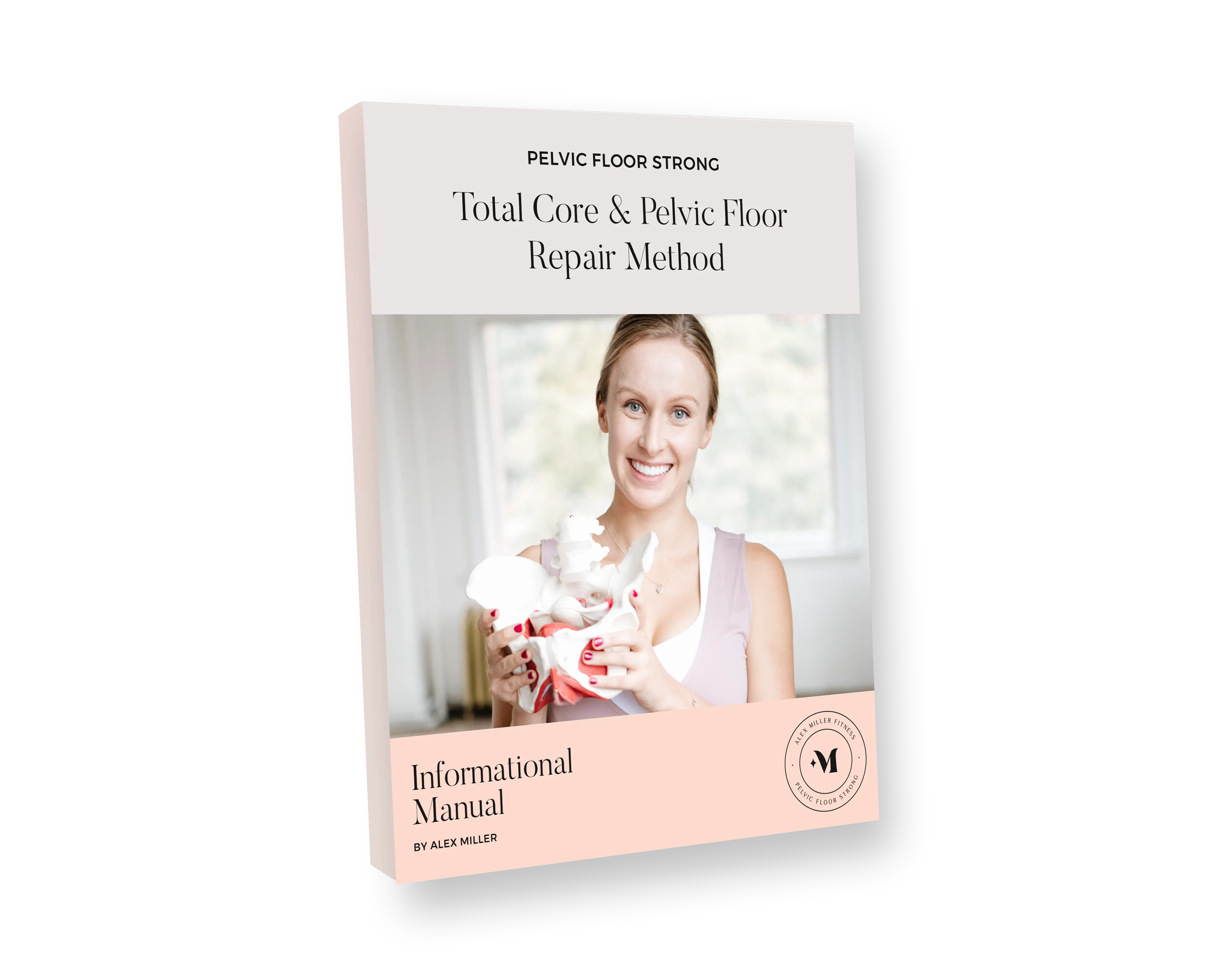
Pelvic Floor Strong pricing — Here’s how much it typically costs if you order from the official site:
-Digital Package – $49: Instant access to all program videos, guides, and bonus materials for download.
-Physical + Digital Package – $59 + Shipping: Includes printed manuals and materials along with full digital access.
Both packages come with a 60-day money-back guarantee, ensuring a risk-free way to reclaim control over your pelvic health.
Overall, Pelvic Floor Strong can be a practical, time‑efficient option for many women who want to strengthen the pelvic floor and reduce urinary incontinence.
The program’s daily sessions are short—typically around 10–15 minutes—so you can fit consistent pelvic floor exercises into a busy routine while gradually building core stability and pelvic strength.
Privacy Policy | Terms & Conditions | Order Tracking | Contact Us
The information provided on this website is for educational and informational purposes only and should not replace professional medical advice, diagnosis, or treatment. Always consult a qualified healthcare provider before making any changes to your lifestyle, health regimen, or treatment plan. If you have any questions or concerns about your health or medical conditions, please speak with your doctor.
All content on this site, as well as any products sold, reflects the author’s personal opinions and is provided strictly on an “AS IS” and “AS AVAILABLE” basis. We encourage you to conduct your own research, verify information through trusted sources, and consult a qualified healthcare professional before following any recommendations or protocols shared here.
Copyright © 2026 - Pelvic Floor Strong